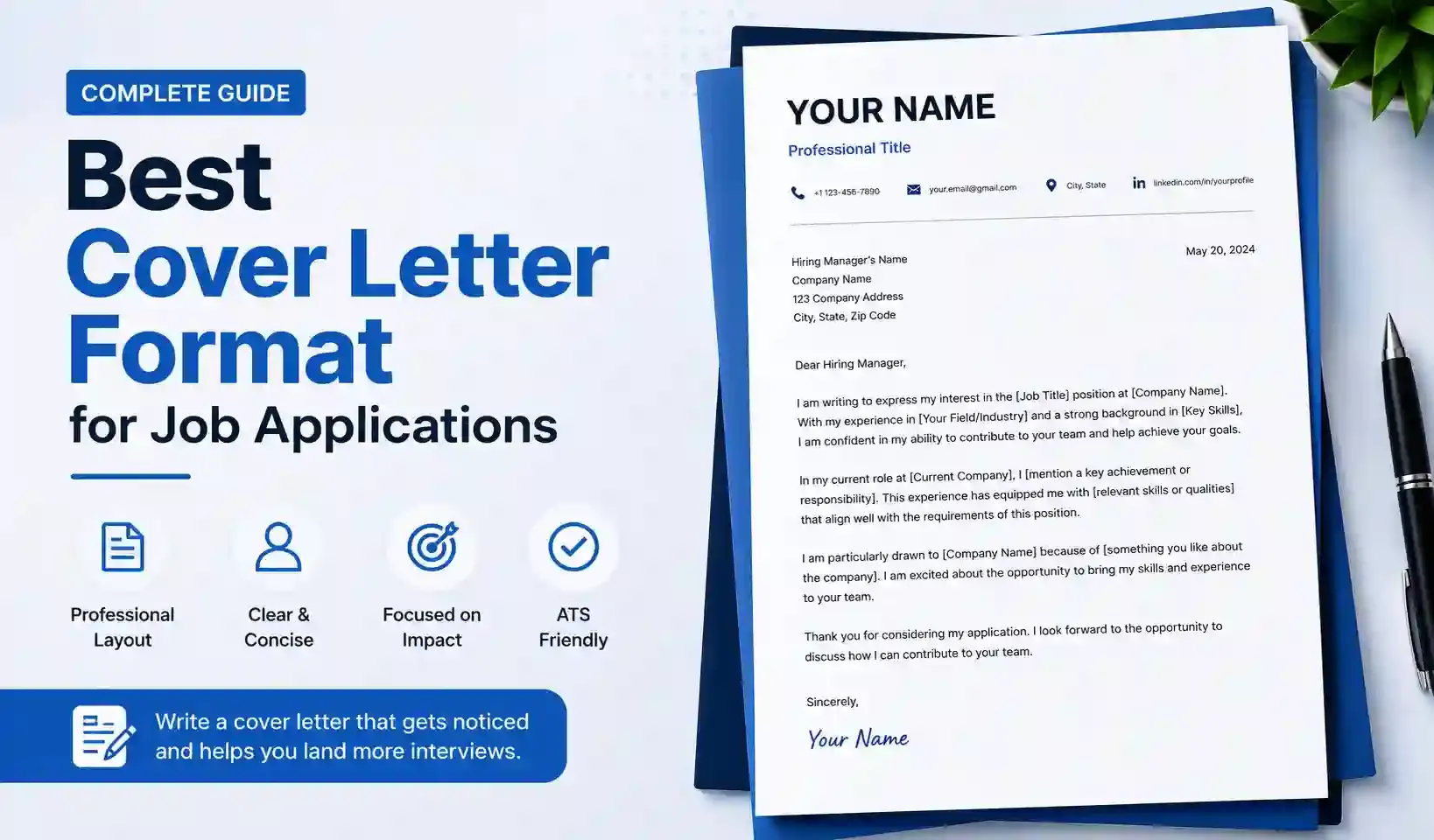
A well-structured cover letter supports your resume and helps employers quickly understand why you are the right candidate.
If you already write a resume, your cover letter should expand on the most relevant skills, achievements, and qualifications from that resume. Together, your resume and cover letter present a complete professional profile.
In this guide, you will learn the best cover letter structure, formatting tips, and practical advice to improve your job applications.
Why Cover Letter Format Matters
A cover letter is often the first thing a recruiter reads. Hiring managers receive hundreds of applications. They scan documents quickly.
A clear format helps them find important information fast.
A good cover letter format also shows professionalism. It proves that you understand how to present yourself in a job application. When you write a resume and pair it with a properly formatted cover letter, your application becomes much stronger.
Good formatting improves readability, which is important for both recruiters and ATS systems.
The Standard Cover Letter Format
The best cover letter format contains five key sections.
1. Header
The header should include your contact information and the employer’s details.
Include:
Your full name
Phone number
Email address
LinkedIn profile (optional)
Date
Hiring manager’s name
Company name
2. Greeting
Always address the hiring manager by name if possible.
Examples:
Dear Hiring Manager,
Dear Ms. Johnson,
Avoid generic greetings like “To whom it may concern.” Personalized greetings increase engagement.
3. Opening Paragraph
The opening paragraph should explain the job you are applying for and why you are interested. Keep it short.
Example:
I am applying for the Marketing Assistant position at ABC Company. I recently completed my degree in marketing and have developed strong skills in digital campaigns and content creation. My resume highlights my experience managing social media and supporting marketing projects.
This section should quickly connect your resume to the job role.
4. Body Paragraph
This is the most important part of your cover letter. Here you explain your value. Focus on:
Key skills
Achievements
Relevant experience
How you can help the company
Keep this section concise. Two short paragraphs are enough.
5. Closing Paragraph
End the cover letter confidently.
Example:
I would welcome the opportunity to discuss how my skills and experience can contribute to your team. Thank you for considering my application. I look forward to hearing from you.
Best regards,
John Smith
This closing shows professionalism and interest.
Formatting Tips for a Professional Cover Letter
Use these tips to make your cover letter look professional:
Keep it one page.
Recruiters prefer short documents.
Use simple fonts.
Choose fonts like Arial, Calibri, or Times New Roman.
Use clear spacing.
Add space between paragraphs.
Align text to the left.
Left alignment improves readability.
Match your resume style.
When you write a resume and cover letter, use consistent formatting and fonts.
Consistency shows attention to detail.
Common Cover Letter Mistakes
Many applicants lose opportunities because of simple mistakes. Avoid these errors:
Repeating your resume:
Your cover letter should add value, not repeat information.
Writing long paragraphs:
Short sentences improve clarity.
Using generic templates:
Customize every cover letter.
Ignoring the job description:
Always match your skills with the role.
A good cover letter should complement the resume you write for that job.
How a Cover Letter Supports Your Resume
A resume shows your qualifications. A cover letter explains them. For example, your resume may list skills such as:
communication
project management
leadership
Your cover letter explains how you used those skills in real situations.
When employers read both documents, they gain a clearer understanding of your abilities.
This combination improves your chances of getting interviews.
Final Thoughts
A strong cover letter format helps employers quickly understand your value. It also strengthens the resume you submit with your job application.
Remember these key points:
Keep the structure simple
Use clear sections
Focus on relevant achievements
Support the resume you write
When you write a resume and pair it with a well-formatted cover letter, you create a professional application that stands out.
With the right structure and clear writing, your cover letter can significantly improve your chances of landing the job you want.