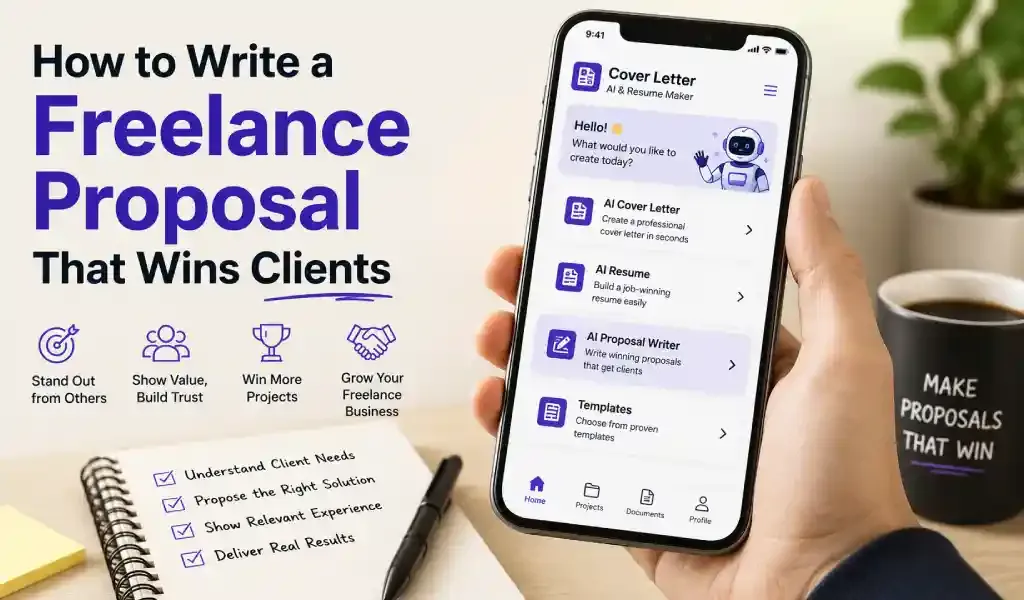
A strong freelance proposal does more than describe your services. It shows the client that you understand their problem, have a clear plan to solve it, and can deliver the result they actually need.
Many freelancers lose projects not because they lack the right skills, but because their proposals sound too generic. A client may receive dozens of proposals saying, "I am an experienced professional and can complete your project on time." That does not give them a reason to choose you.
A winning freelance proposal is specific, easy to read, focused on the client, and clear about what happens next.
What Is a Freelance Proposal?
A freelance proposal is a short document or message that explains how you will handle a client's project, what you will deliver, how long it will take, and why you are a good fit for the work.
Depending on the project, a proposal may include:
- A brief introduction
- Your understanding of the client's needs
- Your proposed solution
- Deliverables
- Project timeline
- Pricing
- Relevant experience
- Examples of previous work
- A clear next step
The goal is not to tell the client your entire professional history. The goal is to make them confident that hiring you is the right decision.
How Do You Write a Freelance Proposal That Wins Clients?
You write a winning freelance proposal by focusing on the client's problem, presenting a specific solution, proving that you can deliver it, and making the next step easy.
Here is a practical structure you can follow.
1. Start With the Client's Problem
The opening paragraph should immediately show that you understand what the client needs.
Avoid starting with a long introduction about yourself. The client already knows they posted a job and is looking for someone who can solve it.
Instead of writing:
"My name is Sarah, and I am a professional graphic designer with five years of experience."
Try something more relevant:
"You need a clean, professional website redesign that makes your services easier to understand and encourages visitors to request a quote."
The second version immediately connects your proposal to the client's situation.
Why does this matter?
Clients want to feel understood. When your proposal reflects their actual goals, it feels more personal and relevant than a template copied for every project.
2. Explain How You Will Solve the Problem
After identifying the problem, explain your approach.
Keep it simple. You do not need to describe every technical detail unless the client specifically asks for it.
For example, a web developer could write:
"I'll first review your existing website to identify usability and mobile responsiveness issues. Then I'll redesign the key pages, improve the navigation, optimize the layout for mobile users, and test the final version before launch."
This tells the client exactly what you plan to do without overwhelming them.
A good proposal answers one important question:
"What will you actually do for me?"
3. Focus on Results, Not Just Services
Clients usually care more about the result than the task itself.
Instead of saying:
"I will write 10 blog posts."
You could say:
"I'll create 10 well-researched blog posts designed to answer your customers' common questions, improve search visibility, and give your website useful content that supports your services."
The service is still there, but the value is clearer.
Whenever possible, connect your work to a meaningful outcome such as:
- More qualified leads
- Better website usability
- Higher engagement
- Faster delivery
- Better customer communication
- A stronger brand presentation
- More organized business processes
Do not promise results you cannot control. Explain the value your work is designed to create.
4. Show Relevant Experience
Your proposal does not need every achievement from your career. Include experience that relates directly to the client's project.
If someone wants an e-commerce website, talk about relevant e-commerce projects. If they need social media content, show examples of social media work.
For example:
"I recently redesigned an online clothing store, simplifying its product navigation and improving the mobile shopping experience. I can bring a similar user-focused approach to your project."
Specific experience is more convincing than simply saying you are "highly experienced."
5. Include Samples That Match the Project
Work samples can help a client make a decision faster.
Choose two or three of your most relevant examples instead of sending a huge collection of unrelated work.
If possible, briefly explain what each example demonstrates.
For example:
Website redesign: Demonstrates responsive design and simplified navigation.
Product landing page: Demonstrates conversion-focused layout and clear messaging.
Mobile app interface: Demonstrates experience designing simple user flows.
This gives the client context instead of forcing them to guess why the samples matter.
6. Make Your Freelance Proposal Easy to Read
A proposal should be easy to scan, especially when a client is reviewing several freelancers.
Use:
- Short paragraphs
- Clear headings
- Bullet points
- Simple language
- Specific details
- A logical structure
Avoid enormous blocks of text and unnecessary industry jargon.
A client should be able to understand your proposal in less than a minute and then read deeper if they are interested.
7. Be Clear About Deliverables
Clearly explain what the client will receive.
For example:
Project Deliverables
- 5 website pages
- Mobile-responsive design
- Contact form integration
- Basic SEO setup
- Two rounds of revisions
- Final files and website deployment
Clear deliverables prevent misunderstandings later.
They also make your proposal feel more professional because the client knows exactly what they are paying for.
8. Give a Realistic Timeline
A simple timeline can make your proposal much stronger.
For example:
Day 1 to 2: Research and project planning
Day 3 to 5: First draft
Day 6: Client feedback
Day 7 to 9: Revisions and final delivery
Do not promise an unrealistically short deadline just to win the project. A realistic timeline builds more trust than an aggressive promise you may struggle to keep.
9. Explain Your Pricing Clearly
Your pricing should be easy to understand.
Depending on the project, you can charge hourly, by milestone, or at a fixed project rate.
For a fixed project, you might write:
Total project cost: $500
This includes the agreed deliverables, two rounds of revisions, and final delivery.
If there are additional services that are not included, mention them clearly.
Transparent pricing helps prevent confusion and gives the client a better understanding of what they are purchasing.
10. End With a Clear Call to Action
Do not finish your proposal with "I hope to hear from you."
Tell the client what they can do next.
For example:
"If this approach matches what you have in mind, send me your current website and I'll review the key areas we'd improve before we get started."
Or:
"If you'd like to move forward, we can confirm the final deliverables and project timeline today."
A clear call to action makes it easier for the client to respond.
Freelance Proposal Example
Here is a simple example you can adapt:
Hi [Client Name],
I understand that you need a modern website that clearly presents your services and works smoothly on both desktop and mobile devices.
I'll start by reviewing your current website and identifying areas that can be improved. I'll then redesign the key pages with a cleaner structure, easier navigation, and a mobile-friendly layout.
What I'll deliver:
- Homepage redesign
- About and Services pages
- Contact page
- Responsive mobile design
- Two rounds of revisions
- Final website implementation
I've worked on similar business websites and can share relevant examples with you.
The estimated timeline is 7 to 10 days, depending on feedback and content availability. The total project cost is $600.
If this sounds like the direction you're looking for, send me your current website and I'll suggest the first improvements.
Best,
[Your Name]
Common Freelance Proposal Mistakes to Avoid
Even a skilled freelancer can weaken a proposal by making a few common mistakes.
Using the Same Proposal for Every Client
Templates save time, but copying the same proposal word for word makes it obvious that you have not researched the project.
Use a template for structure, then personalize the important sections.
Talking Too Much About Yourself
Your experience matters, but the proposal should primarily address the client's needs.
Use your experience as evidence that supports your solution.
Making Unrealistic Promises
Avoid guarantees such as "I'll double your sales" unless you have a legitimate basis for making such a claim.
Focus on what you can actually control.
Writing Too Much
A proposal does not need to be an essay. Give the client enough information to understand your approach, value, timeline, and price.
Forgetting the Next Step
Always make it easy for the client to respond.
Tell them what information you need or what they should do next.
How Long Should a Freelance Proposal Be?
A freelance proposal should usually be long enough to address the project clearly but short enough for the client to read quickly.
For a straightforward project, one to three focused pages or a few well-written paragraphs may be enough. More complex projects may require additional details about milestones, deliverables, research, and pricing.
The right length depends on the complexity of the project, not on a fixed word count.
Final Thoughts
A freelance proposal wins clients when it makes the hiring decision easier. Show that you understand the client's problem, explain how you plan to solve it, highlight relevant experience, and make the next step clear. A short, personalized proposal will usually make a stronger impression than a long message filled with generic claims.
If writing a proposal from scratch takes too much time, Cover Letter AI & Resume Maker can also help you create freelance proposals based on the project and your experience. It can turn your skills, background, and the client's requirements into a structured proposal, giving you a strong starting point instead of a blank page. You can then review it, add project-specific details, and adjust the wording so it sounds natural and genuinely reflects your approach.
The goal isn't to send the longest or most impressive-sounding proposal. It's to send one that makes the client feel understood, clearly communicates the value you offer, and gives them a good reason to start a conversation.