 Cover Letter AI & Resume Maker
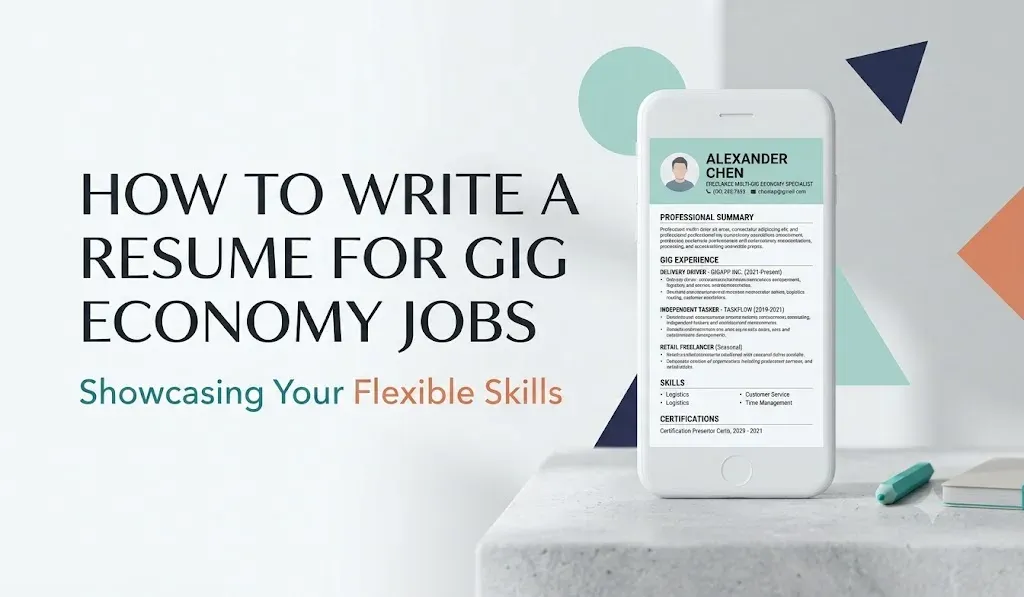
Write a gig economy resume by grouping your gig and freelance work under one clear heading, giving it a specific job title instead of "self-employed," and leading each bullet with a result you can verify: jobs completed, ratings and repeat customers. Below are a layout, safe metrics and an example you can adapt.
Examples use fictional details. Replace them with your own, and share only numbers you can show if asked.
Key Takeaways
- Group small gigs under one heading, organized by skill or industry.
- Use a specific title, such as "Freelance Delivery Driver," not "Self-Employed."
- Lead with results you can verify: jobs completed, ratings as displayed and repeat clients.
- Include date ranges, and leave out gigs that are unrelated or too outdated.
- Choose the wording for the job you want, not for the platform you used.
Should You Put Gig Work on Your Resume?
Yes, when it relates to the job you want. Arcadia University's Career Launchpad, republishing a guide from The Muse (March 20, 2026), advises leaving out freelance projects that are unrelated to the target job or too outdated to reflect your current skills. Gig work can show reliability, customer service, scheduling and self-direction, so describe it with the same detail you would give any other job.
Where Does Gig Work Go on a Resume?
Hardin-Simmons University's Virtual Career Center, republishing a Muse article from December 3, 2024, says to list freelance work within Experience if you have only a few projects, or to create a separate Freelance Projects section if it makes up a large part of your career.
| Your situation | Where to put it | Example heading |
|---|---|---|
| A few gigs next to regular jobs | Inside Experience, in date order | Freelance Graphic Designer |
| Gig work is most of your history | Its own section near the top | Freelance and Independent Work |
| Several gigs that use the same skills | One grouped entry with a combined title | Independent Delivery Partner |
How Do You Combine Several Gigs Into One Entry?
Both guides advise combining several small gigs under one heading, grouped by skill or industry, and naming the clients or industries you served. Instead of five separate entries, write one:
- Pick the thread. Choose the skill or industry that links the gigs, such as delivery, design or writing.
- Write one heading. Use a specific title and the full date range, from your first gig to the present.
- Add two to four bullets. Give each a result, not a task list.
- Cut what does not fit. Move unrelated gigs off the page.
If a client is confidential, describe the industry instead, such as "a regional retailer."
Which Numbers Are Safe to Include?
Use figures you can show on your own account or invoices. Both guides advise quantifying results where you can.
| Metric | Example bullet | Check before you use it |
|---|---|---|
| Jobs completed | Completed [number] orders over [number] months | Your platform history or invoices |
| Rating | Kept a [rating] average rating across [number] reviews | Use the rating as displayed, with the review count |
| Repeat clients | Kept [number] repeat clients over [time] | Your client list |
| Deadlines | Delivered [number] projects on or before the agreed date | Your own records |
| Earnings or revenue | Generated [amount] in sales for a client's online shop | Only if the number is yours to share |
Earnings are optional. Share a figure only if it helps and you are comfortable explaining it. If a client's data is confidential, describe the scale instead.
If you pitch clients or employers often, Cover Letter AI & Resume Maker can draft a cover letter from the role, company, tone and key skills you enter. Rewrite the opening so it speaks to each client's project.
What Does a Gig Economy Resume Example Look Like?
This fictional example targets a dispatcher role. The writer also did freelance writing, but left it off because it does not relate to this job.
Independent Delivery Partner (Food, Grocery and Package Delivery)
[City, State] | [Month Year] to present
- Completed [number] orders across three delivery platforms, with a [rating] average rating across [number] reviews.
- Planned routes around peak hours and traffic to keep delivery times predictable.
- Resolved missing-item and wrong-item problems directly with customers and kept a log of each case.
- Worked [number] hours a week around full-time classes.
The entry works because it has one heading, a specific title, platforms grouped by what they share and numbers the writer can check. For a writing job, the same person would give the writing work its own entry and shorten the delivery one.
How Do You Tailor Gig Work to the Job You Want?
- Read the post. Pick the two or three skills it names, such as customer service, scheduling or written communication.
- Match them to your gigs. Rewrite bullets with the post's wording where it is true. Our guide on how to show your skills on a resume has examples.
- Lead with the closest match. Put the most relevant gig first, or give it its own entry.
- Add a short summary. A line or two can connect your gigs to the role. See how to write a resume summary.
- Note self-management for remote roles. Gig work already shows it. Our resume tips for remote jobs explain how to present it.
- Pitching clients instead of employers? In that case a good freelance proposal matters as much as the resume.
Related Reading
- How to Write a Freelance Proposal That Wins Clients: win clients with a clear proposal.
- How to Write a Strong Resume Summary (With 10 Examples): a formula and ten examples.
- How to Show Your Skills on a Resume (With Examples): show skills with proof.
- Resume Tips for Remote Jobs: Skills, Tools and Examples: present remote and independent work.
Sources: Arcadia University Career Launchpad, "How to Format a Resume with Freelance Work" (March 20, 2026; originally published by The Muse); Hardin-Simmons University Virtual Career Center, "How to Format a Resume with Freelance Work" (December 3, 2024; originally published by The Muse).
Pitching several clients? Draft a starting point in Cover Letter AI & Resume Maker, then rewrite the opening so it speaks to that client's project. Free to download from the App Store for iPhone and iPad, with in-app purchases for some features. AI drafts can contain mistakes, so read and edit every line before you send it.
Frequently Asked Questions
Should I list gig work on my resume? Yes, if it relates to the job you want. List it like any other job, with a specific title, dates and results. Arcadia's career center advises leaving off freelance projects that are unrelated to the target job or too outdated to show your current skills.
How do I list multiple gigs? Combine them under one heading, grouped by skill or industry, instead of listing each as its own job. Give the heading a specific title, add the full date range, and write two to four bullets with results. Drop any gig that does not support the job you are applying for.
How do I show ratings or earnings? Use ratings as your platform displays them and add the number of reviews, since a rating without context says little. Earnings are optional. Share a figure only if it helps and you can back it up. Otherwise describe volume, such as orders completed or repeat clients.
Is gig work real experience? Yes. Hardin-Simmons University's career center says to list freelance work under Experience, or in its own section if it makes up much of your career. Describe it with the same detail as any other job: what you did, for whom and what came of it.
Should I name the platforms? It is optional. Naming a well-known platform can show the type of work, but the guides we reviewed advise naming clients or industries. If a client is confidential, describe the industry instead, such as "a regional retailer." Keep the focus on results, not the platform's brand.